Steam Trap Selection Guide: Types, Principles and Common Mistakes
Why one failed trap can waste thousands of dollars of steam a year, and how to choose the right trap.
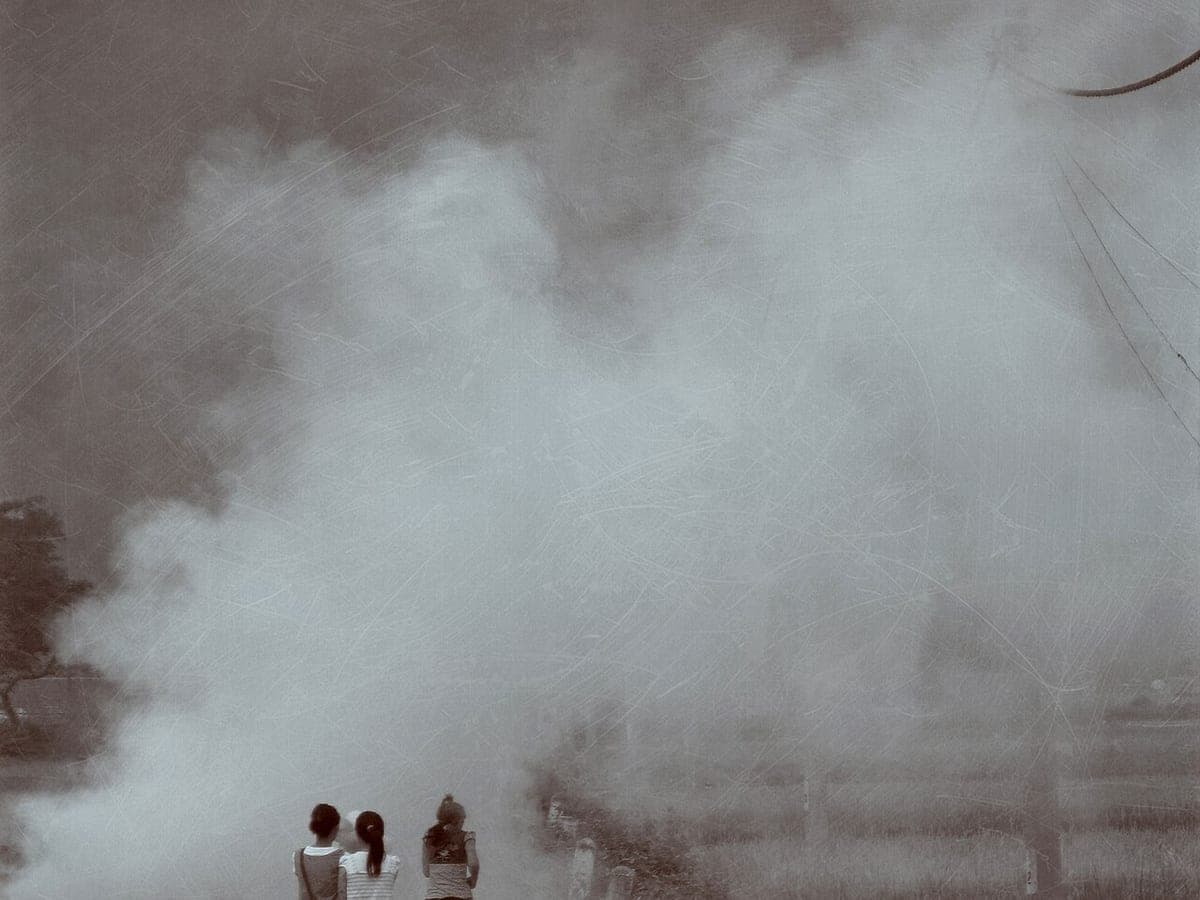
Photo: Van Do · CC BY-SA 2.0 · Image credits
What does a steam trap do?
A steam trap removes condensate and air from the system without letting live steam escape. Condensate left in a heat exchanger or line blankets the heat-transfer surface and causes water hammer; live steam passing through simply wastes energy.
The three main trap families
Traps fall into mechanical, thermostatic and thermodynamic groups according to how they work. The table below compares them in practice.
| Trap type | Principle | Air venting | Water-hammer resistance | Best application |
|---|---|---|---|---|
| Float & thermostatic (F&T) | Density difference; float | Excellent | Medium | Exchangers and air handlers |
| Inverted bucket | Density difference; bucket | Poor to medium | Good | Main lines, high pressure |
| Thermodynamic (TD) | Steam velocity; disc | Medium | Excellent | Distribution and tracing |
| Thermostatic (bimetal / capsule) | Temperature difference | Good | Good | Tracing and small users |
The cost of one failed trap
A trap stuck open sends live steam into the condensate line. Loss grows with orifice size and pressure and follows the choked-flow equation for an orifice:
ṁ = Cd · A · P₀ · √(k / (R·T₀)) · (2/(k+1))^((k+1)/(2(k−1)))
| Orifice | Steam loss (kg/h) | Per year (t, 8000 h) | Annual cost (USD)* |
|---|---|---|---|
| 1.5 mm | 6 | 45 | 1121 |
| 3 mm | 22 | 179 | 4484 |
| 5 mm | 62 | 498 | 12457 |
How to choose
- Capacity: size for start-up condensate load with a safety factor of 2–3, not only steady state.
- Differential pressure: subtract condensate back-pressure from inlet pressure; the trap must work at that difference.
- Air venting: F&T for exchangers and air handlers; TD or inverted bucket for main lines.
- Installation: strainer upstream, isolating valve, and a check valve downstream where needed.
Practical tip
An annual trap survey with an ultrasonic detector or infrared thermometer usually pays for itself within the year. In plants with no maintenance programme, 10–20 % of traps are typically failed.
Related articles
Control Valve Sizing: Flow Coefficients Cv and Kv in Practice
From the basic formula to selecting size and trim characteristic, with a worked example and a Kvs table.
2 min read
PID Controller Tuning: Fundamentals, Methods and Step Response
The effect of each parameter, Ziegler–Nichols and lambda tuning, with a simulated first-order-plus-dead-time process.
1 min read
The 4–20 mA Current Loop: Principles, Wiring and Troubleshooting
Why it has been the industrial signal standard for over half a century, and how to design it properly.
2 min read