AI & Data
Predictive Maintenance with Machine Learning in Energy Systems
From raw sensor data to early warning: algorithms, workflow and common pitfalls.
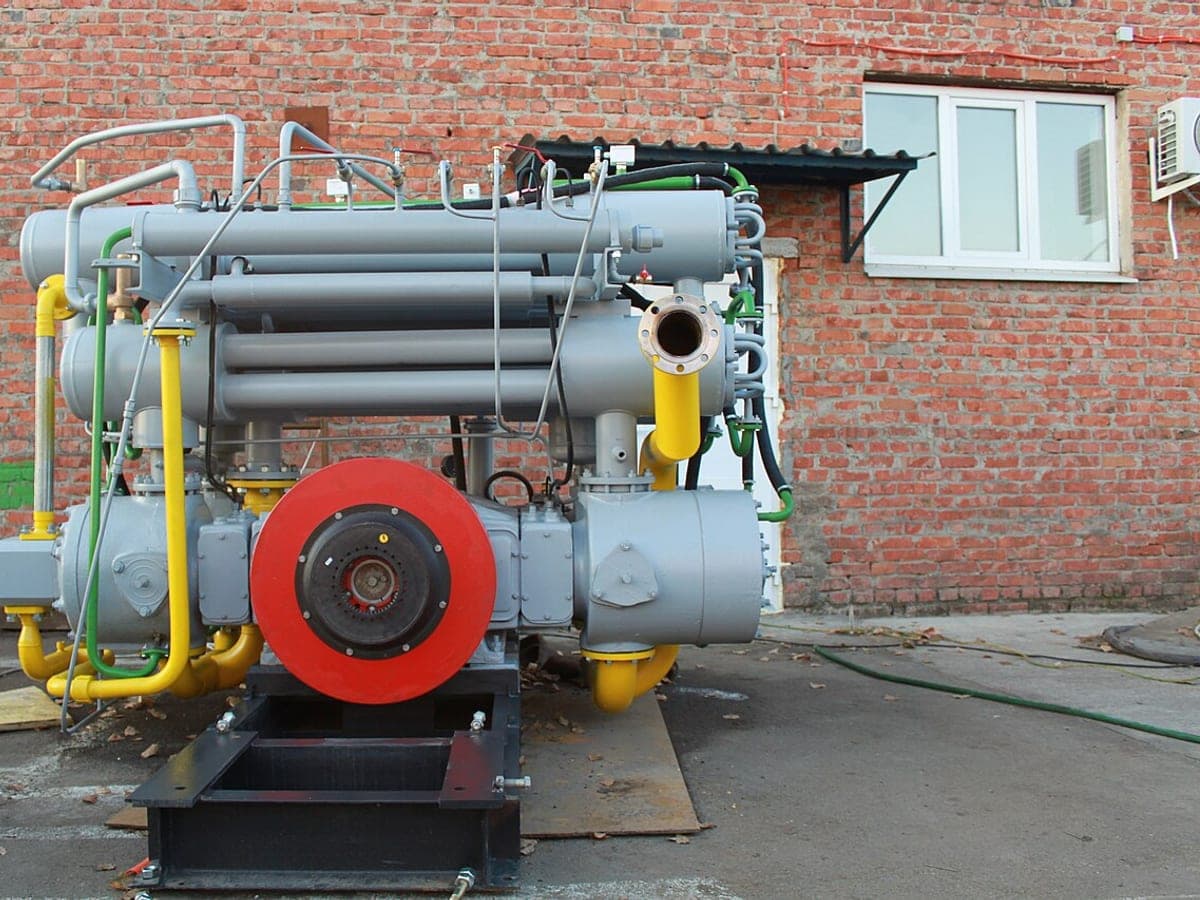
Photo: Aleksey23 · CC BY-SA 3.0 · Image credits
From reactive to predictive
Reactive maintenance repairs after failure; preventive maintenance follows the calendar; predictive maintenance follows the machine's real condition. Machine learning analyses vibration, temperature, current and pressure and spots small changes long before failure.
A five-step workflow
- Acquire data: sensors and PLC; sampling rate matched to the phenomenon (kHz for vibration, seconds for temperature).
- Pre-process: denoise, handle gaps, time-align and normalise by operating condition.
- Extract features: RMS, kurtosis, spectra, trends and engineered features.
- Model: anomaly detection or remaining-useful-life (RUL) prediction.
- Operate: alerting, dashboards and maintenance-team feedback to improve the model.
Choosing the algorithm
| Method | Data needed | Interpretability | Typical use |
|---|---|---|---|
| Threshold / SPC | Little | Very high | Starting point |
| PCA / Mahalanobis | Moderate | High | Correlated sensors |
| Isolation Forest | Moderate | Medium | Unlabelled anomalies |
| Autoencoder | Large | Low | Complex signals |
| LSTM / GRU | Large + failure labels | Low | RUL prediction |
Common pitfalls
- No failure labels: failures are rare; start with unsupervised methods.
- Changing operating conditions: include load and ambient temperature or false alarms multiply.
- Sensor quality: a good model with a bad sensor still gives bad results.
- No feedback loop: without recording inspection results the model cannot improve.
Recommendation
Start with one critical asset and 3–5 sensors, set a simple threshold baseline and add the model afterwards; tangible results arrive faster than with a large programme.
Related articles
Steam Trap Selection Guide: Types, Principles and Common Mistakes
Why one failed trap can waste thousands of dollars of steam a year, and how to choose the right trap.
2 min read
Control Valve Sizing: Flow Coefficients Cv and Kv in Practice
From the basic formula to selecting size and trim characteristic, with a worked example and a Kvs table.
2 min read
PID Controller Tuning: Fundamentals, Methods and Step Response
The effect of each parameter, Ziegler–Nichols and lambda tuning, with a simulated first-order-plus-dead-time process.
1 min read